★★★★★
“Big blue gum out the back was hanging over the neighbour's pool and causing grief. The boys rigged it down bit by bit, couldn't believe how neat they left everything. Neighbour came over after to say thanks too, which was a first.”
Tree lopping
Need a tree made smaller or cleared back?
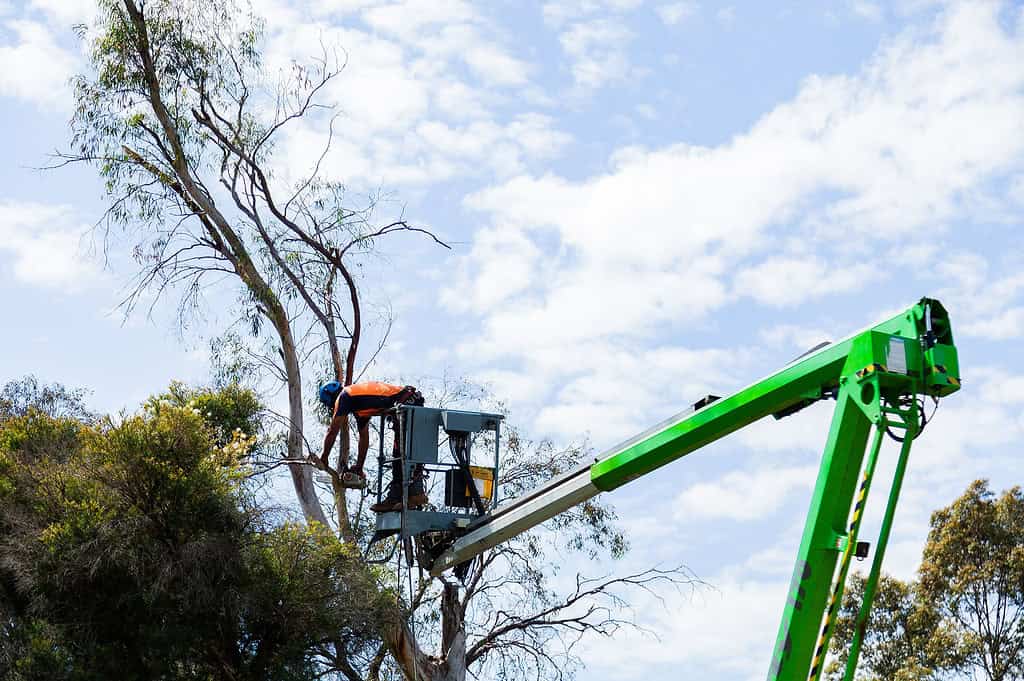
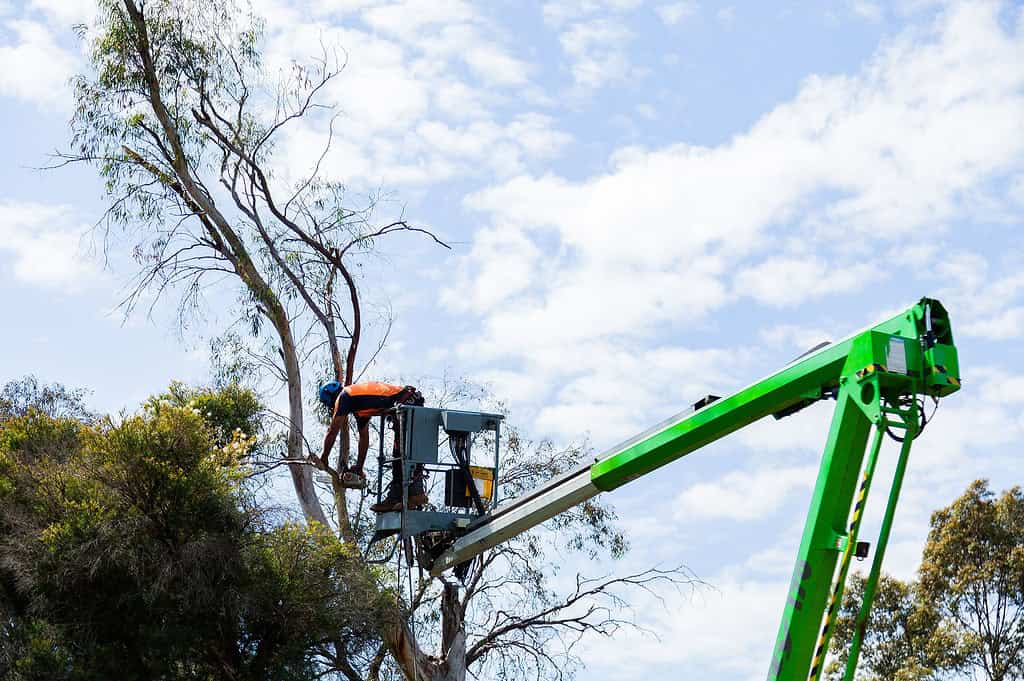
People often call it lopping when a tree is too tall, spreading over a roof or blocking useful space. John's looks at the tree and recommends selective pruning, reduction or removal to achieve the result you need.
- Fully insured
- Family-owned since 1982
- North Shore and Ryde
- Tree Lopping for homes, strata and businesses
Choose the right work
Work out what needs to be cut back.
A lopping enquiry usually starts with a practical problem: too much height, branches over a roof, blocked light or a tree spreading into the wrong space. We look at which parts of the canopy are causing the problem and how much can sensibly be removed.
Selective pruning or staged reduction may be the right answer. If the tree cannot be kept in a suitable form, removal can also be discussed.
Tree Lopping — at a glance
Useful things to know about tree lopping.
- Common requests
- Height, clearance, overhang, storm damage and canopy size
- Preferred approach
- Selective pruning or reduction where the tree can retain sound form
- Avoid
- Indiscriminate topping that leaves stubs and weak regrowth
- After cutting
- Chip, remove or keep suitable branches as mulch
Possible outcomes
Turn a broad request into a clear plan.
- 01
Clearance
Identify the branches affecting a roof, driveway, fence or other structure.
- 02
Canopy reduction
Discuss a selective reduction that retains appropriate growth points.
- 03
Dead or damaged limbs
Separate storm damage and deadwood from routine size-management work.
- 04
Removal assessment
If keeping the tree is not suitable, discuss removal and any council approval that may apply.
What to expect
Clarify the outcome first.
Step 01
Show the concern
Send full-tree and close-up photos with the area you need cleared.
Step 02
Discuss options
Compare pruning, reduction and removal against the tree and site.
Step 03
Check approval
Confirm the current council requirement for the proposed work.
Step 04
Agree the cuts
Confirm which parts of the canopy are being reduced and how branches will be handled.
Councils may treat excessive pruning or topping as damage to a protected tree. Check the current rules and agree the intended cuts before booking.
Council guidance
Tell us about the job
Need a tree reduced or cleared back?
Tell us which parts of the tree are too high, wide or close to a building, driveway or boundary.
Tree lopping enquiry
Include the suburb, the result you want and photos showing the full canopy.
Customer feedback
What our customers say.
Read what customers have said about the work, the team and how their property was left.
★★★★★
“Had a huge gum leaning over the back of the house that we'd been worried about for ages. John came out, talked us through the options, and his crew had it down in a morning. Fair price and they swept the deck on the way out which was a nice touch.”
★★★★★
“Storm took out half our liquidambar Thursday night. Called first thing Friday, they had someone here before lunch. Blocked the driveway off, cleared the debris, left it tidy. Sent the quote through before they started which I appreciated.”
A clearer choice
Focus on the outcome, not the label.
Selective options
Pruning or reduction is discussed before heavy canopy removal.
Tree condition considered
The site visit accounts for structure, live canopy and damaged wood.
Clearance mapped
Identify the roof, driveway, boundary or garden area that needs more room.
Branches and cleanup
Branches can be chipped, removed or left as mulch, and the work area cleared afterwards.
Useful answers
Tree lopping questions.
Indiscriminate topping can leave poor structure, decay points and weak regrowth. The team will discuss selective pruning, reduction or removal based on the tree and the outcome required.
Service area
Tree lopping enquiries across Sydney's North Shore and Ryde.
Choose your suburb for local tree lopping information and council links.
01
Lower North Shore
The Lower North Shore includes established harbour-side and inland suburbs across several council areas. Access, neighbouring buildings and council controls can all shape how tree work is planned.
37 suburbs
- Artarmon
- Cammeray
- Castle Cove
- Castlecrag
- Chatswood
- Cremorne
- Cremorne Point
- Crows Nest
- Greenwich
- Henley
- Hunters Hill
- Huntleys Cove
- Huntleys Point
- Kirribilli
- Kurraba Point
- Lane Cove
- Lane Cove North
- Lane Cove West
- Lavender Bay
- Linley Point
- Longueville
- McMahons Point
- Middle Cove
- Milsons Point
- Mosman
- Naremburn
- Neutral Bay
- North Sydney
- Northbridge
- Northwood
- Riverview
- St Leonards
- Waverton
- Willoughby
- Willoughby East
- Wollstonecraft
- Woolwich
02
Upper North Shore
The Upper North Shore follows the rail and Pacific Highway corridor through leafy suburbs and bushland-edge neighbourhoods. Larger trees, sloping blocks and protected vegetation often require careful access and council checks.
40 suburbs
- Arcadia
- Asquith
- Beecroft
- Berowra
- Berowra Heights
- Brooklyn
- Chatswood West
- Cheltenham
- Cherrybrook
- Cowan
- Dangar Island
- Dural
- East Killara
- East Lindfield
- Galston
- Gordon
- Hornsby
- Hornsby Heights
- Killara
- Lindfield
- Mount Colah
- Mount Kuring-Gai
- Normanhurst
- North Epping
- North Turramurra
- North Wahroonga
- Pennant Hills
- Pymble
- Roseville
- Roseville Chase
- South Turramurra
- St Ives
- St Ives Chase
- Thornleigh
- Turramurra
- Wahroonga
- Waitara
- Warrawee
- West Pymble
- Westleigh
03
Ryde Area
The Ryde area includes residential, river-side and higher-density neighbourhoods. Driveway width, shared boundaries and safe equipment access are common planning considerations.
14 suburbs
Need help cutting a tree back?
Not sure whether you need pruning or removal?
Send photos and explain which parts of the tree are causing the problem.